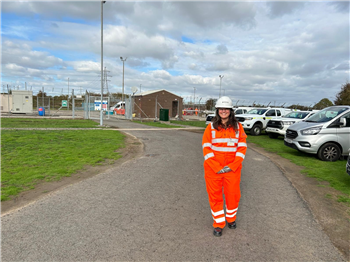
 “We need to be encouraging women into engineering and showing them that it’s not just fixing stuff on building sites. There is so much more to it and we need to make it really clear for future generations.”
That is the view of Corinna Burger, Programme Director - New Molecules, at National Gas Transmission, where she leads the development and delivery of major hydrogen and carbon transport programmes critical to the UK’s energy transition.
Corinna is responsible for shaping strategy and overseeing the progression of nationally significant infrastructure projects, from early concept through FEED, consents, and delivery. A mechanical engineer by background, she brings over 15 years’ experience in advanced engineering research, innovation and major programme leadership.
Her track record is strong in developing technologies and infrastructure solutions, from early‑stage innovation through to deployment, and of building multidisciplinary teams to deliver complex, first‑of‑a‑kind projects. It is the objective of Corinna’s team to ensure that those projects are safe and investable and deliver long‑term value for consumers.
Her team does vital work and, encouragingly, is heavily women-driven – a small step forward towards evening up the gender in balance in the engineering sector.
“In my leadership team at the moment, we are 60 per cent women,” Corinna said. “In some areas, it is moving in the right direction, within research, new molecules and decarbonisation, but other areas are still quite male-dominated so there is still work to do there to get the balance right.